I want to begin with a memory that is not mine but has been told to me many times. An old man, dying, calls his children to his bedside. He does not give them money. He gives each of them a single stick, and asks them to break it. They break the sticks easily. Then he hands them a bundle of sticks tied together, and asks them to break the bundle. They cannot. Whether or not it ever happened, the memory teaches what Ubuntu is — better than any definition does. Why Ubuntu Still Matters? The story is the answer.
What Ubuntu Actually Means
Let me give the canonical definition first, then try to do a little better. Ubuntu, in its most cited form, is captured in the Nguni phrase 'umuntu ngumuntu ngabantu' — a person is a person through other people. It names a worldview in which the self is not a fortress but a node in a network, and in which dignity, identity, and success are inherited from and accountable to community. It has shaped post-apartheid South Africa, modern leadership theory, and increasingly the way thoughtful organisations think about teams. The canonical version is correct but tame. The full version of Ubuntu is less polite, more demanding, and more interesting. It does not flatter the reader who has just discovered it.
Umuntu ngumuntu ngabantu.Nguni — A person is a person through other people.
The Question This Post Is About
The reasons Ubuntu keeps surfacing in serious modern conversations. The question is worth taking seriously, because Ubuntu is one of those concepts that loses its shape when handled carelessly — and recovers it as soon as the reader is willing to slow down and listen.
If you take Ubuntu seriously at work, the first thing that has to change is the meeting. Not its agenda — its shape. Western meetings are optimised for speed and for the loudest contributor. Ubuntu is optimised for something else: for the quality of decisions that hold. Every retrospective begins with the question of what the team made possible together, not who failed individually. The trade-off is real. Meetings under Ubuntu take longer. The decisions also unstick less often.
A Second Angle
There is a specific application of Ubuntu that managers rediscover every few years and act surprised to find: the practice of asking, before any consequential decision, who has not yet been heard from. The question seems procedural. It is not. It is a small Ubuntu act, repeated, that changes the temperature of an organisation over years. Every retrospective begins with the question of what the team made possible together, not who failed individually.
Where the Concept Resists
There is a real risk in romanticising Ubuntu. The Southern African (Bantu) traditions that produced it have always also produced internal critics — voices warning against the misuse of communal philosophy to demand conformity, to silence the young, to protect bad behaviour by elders. The honest defender of Ubuntu keeps those critics at the table.
What to Do With This
There is no certificate at the end of Ubuntu. There is only the slow accumulation of choices made differently — meetings shaped differently, relationships tended differently, decisions weighed differently. The reward is not visible. The cost is real. Over time the difference becomes a kind of life.
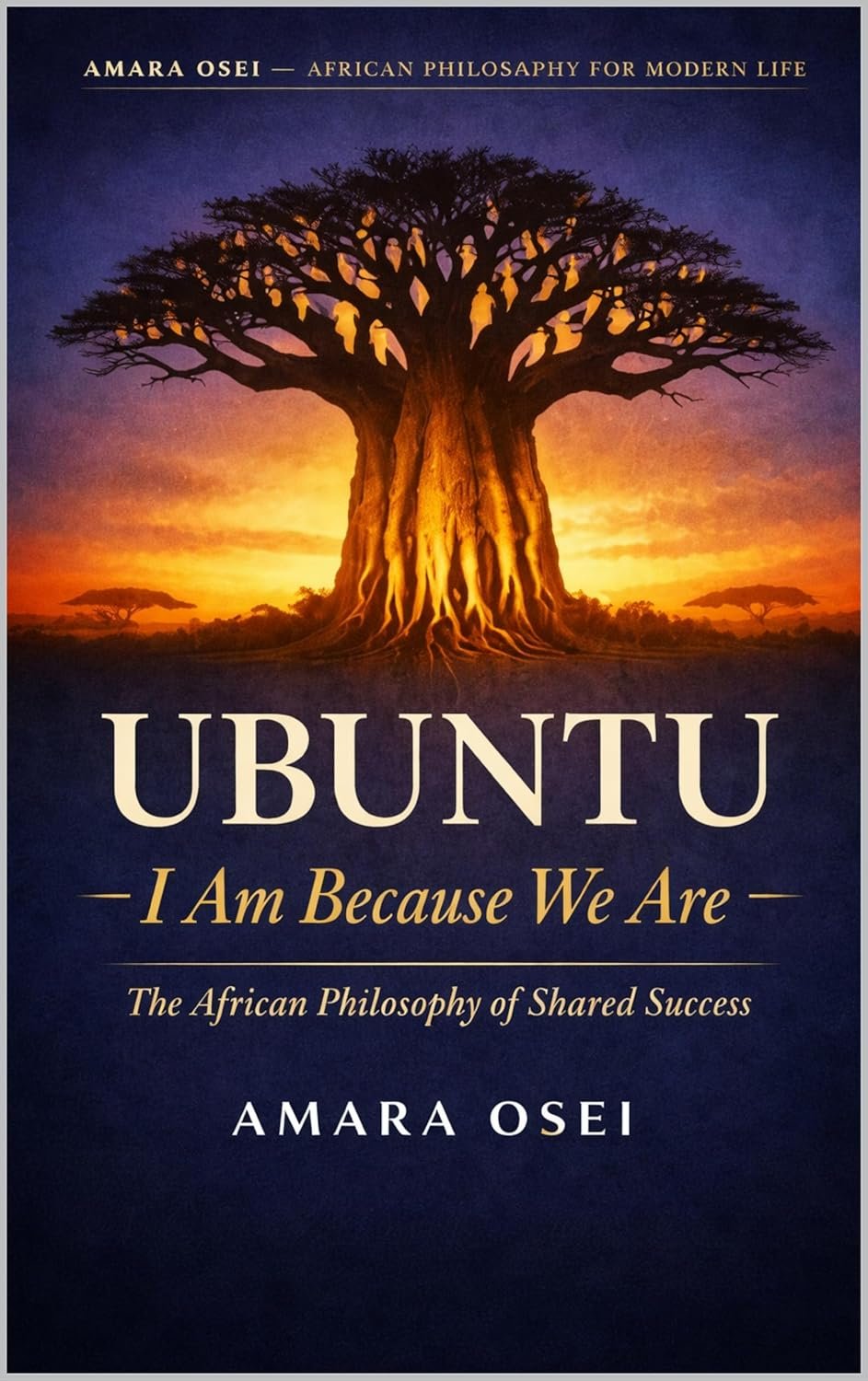
The full philosophy, as a book
The full philosophy of shared success — across leadership, conflict, accountability, and the digital age.
Read on Amazon