There is a particular way the word Ubuntu arrives in modern conversations. It is invoked, often, as a slogan — pinned to a wall in a corporate office, dropped into a leadership keynote, printed on a tote bag. Ubuntu and Christian Thought? The slogan version of Ubuntu is easy to admire and easy to ignore. The actual concept, the one that has shaped Southern African (Bantu) life for generations, is harder. It demands more. And it is, I think, more useful.
What Ubuntu Actually Means
Translators usually settle on something like: Ubuntu, in its most cited form, is captured in the Nguni phrase 'umuntu ngumuntu ngabantu' — a person is a person through other people. It names a worldview in which the self is not a fortress but a node in a network, and in which dignity, identity, and success are inherited from and accountable to community. It has shaped post-apartheid South Africa, modern leadership theory, and increasingly the way thoughtful organisations think about teams. It is a defensible translation. But translation is the surface. Ubuntu carries underneath it a set of assumptions — about what a person is, what owes what to whom, and what success even means — that the English sentence cannot deliver.
One finger cannot lift a stone.Hausa
The Question This Post Is About
Where Ubuntu echoes Christian moral teaching, and where it does something different. The question is worth taking seriously, because Ubuntu is one of those concepts that loses its shape when handled carelessly — and recovers it as soon as the reader is willing to slow down and listen.
There is a specific application of Ubuntu that managers rediscover every few years and act surprised to find: the practice of asking, before any consequential decision, who has not yet been heard from. The question seems procedural. It is not. It is a small Ubuntu act, repeated, that changes the temperature of an organisation over years. Conflict between two colleagues is treated as a problem the wider team has not yet helped them solve.
A Second Angle
The comparison is not symmetric. Ubuntu did not develop in dialogue with the Western frameworks it now sits beside on a bookshelf. It developed inside Bantu life, answering questions that Bantu life kept posing. To ask whether Ubuntu is "better than" individualism, or stoicism, or productivity culture, is to ask the wrong question. The right question is narrower and more useful: what does Ubuntu see clearly that the framework I currently use does not? Conflict between two colleagues is treated as a problem the wider team has not yet helped them solve.
Where the Concept Resists
There is also the question of authority. Who gets to speak for Ubuntu? The traditions in which it lives are old, plural, sometimes in disagreement with each other. Anyone — including the writer of this essay — who claims a definitive reading is overreaching. The careful reader treats every restatement of Ubuntu, including this one, as one voice among many.
What to Do With This
There is no certificate at the end of Ubuntu. There is only the slow accumulation of choices made differently — meetings shaped differently, relationships tended differently, decisions weighed differently. The reward is not visible. The cost is real. Over time the difference becomes a kind of life.
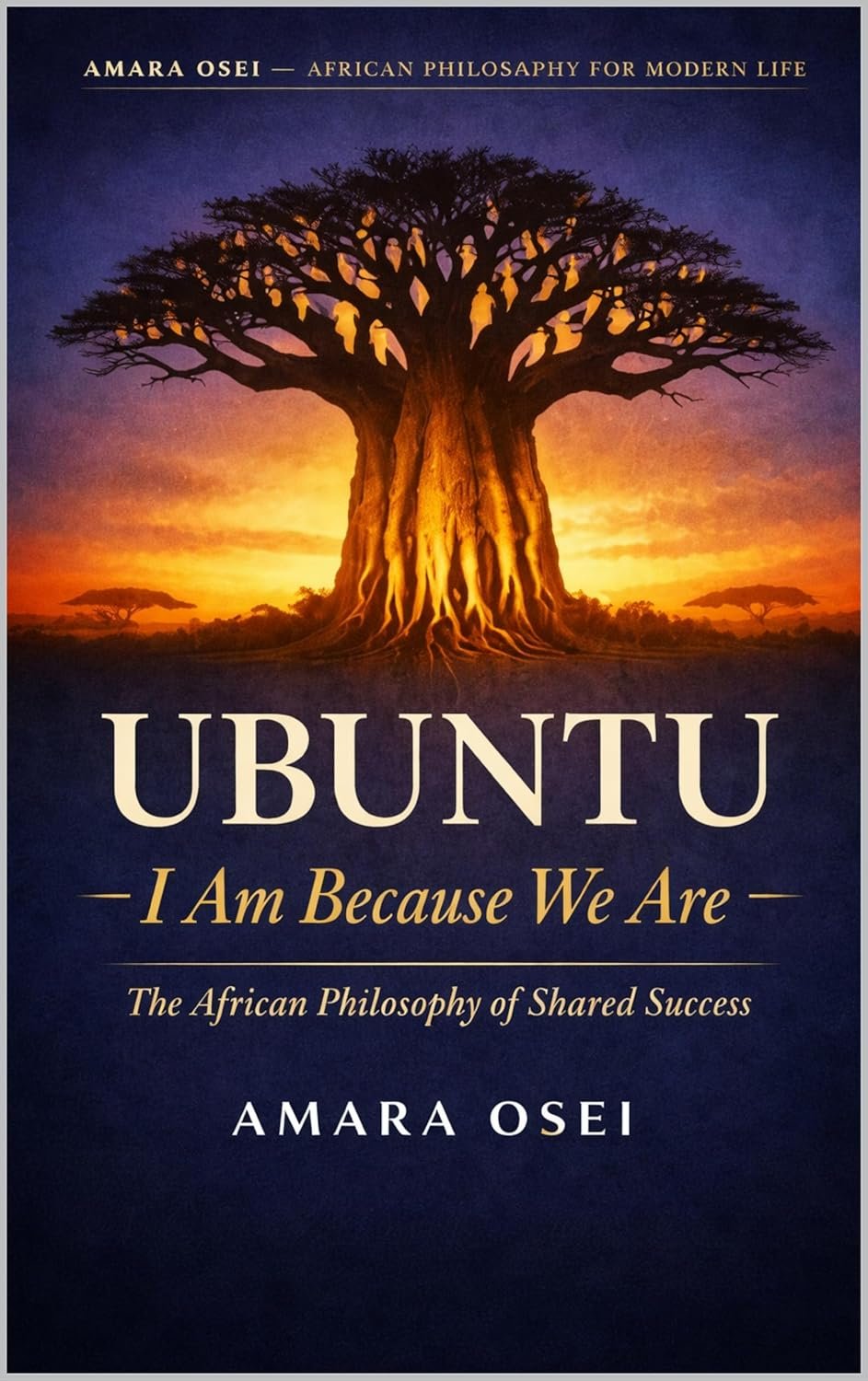
The full philosophy, as a book
The full philosophy of shared success — across leadership, conflict, accountability, and the digital age.
Read on Amazon