Begin with the word itself. Ubuntu, in Nguni / Bantu, sits in a different grammatical and emotional register than its closest English equivalents. Elders on Ubuntu? You cannot answer that question without first sitting with the word — and noticing what English doesn't quite have a slot for.
What Ubuntu Actually Means
Translators usually settle on something like: Ubuntu, in its most cited form, is captured in the Nguni phrase 'umuntu ngumuntu ngabantu' — a person is a person through other people. It names a worldview in which the self is not a fortress but a node in a network, and in which dignity, identity, and success are inherited from and accountable to community. It has shaped post-apartheid South Africa, modern leadership theory, and increasingly the way thoughtful organisations think about teams. It is a defensible translation. But translation is the surface. Ubuntu carries underneath it a set of assumptions — about what a person is, what owes what to whom, and what success even means — that the English sentence cannot deliver.
Umuntu ngumuntu ngabantu.Nguni — A person is a person through other people.
The Question This Post Is About
What Bantu elders have actually said about Ubuntu — and how it differs from the Western retelling. The question is worth taking seriously, because Ubuntu is one of those concepts that loses its shape when handled carelessly — and recovers it as soon as the reader is willing to slow down and listen.
Consider one of the central sayings in the tradition behind Ubuntu: "Motho ke motho ka batho." — A person is a person because of others.. It is the kind of saying that English readers tend to admire and then forget. The Bantu reading is more demanding. Conflict between two colleagues is treated as a problem the wider team has not yet helped them solve. The proverb is not decorative. It is instructional. It has been carried for generations because it solves a problem that does not stop being a problem — a problem the modern reader still meets, every week, dressed in newer clothes.
A Second Angle
Read alongside it: "One finger cannot lift a stone." The two sayings are not redundant. They sit at different angles to the same idea. In Bantu oral tradition this is a common pattern: a concept like Ubuntu is not given a single canonical definition but a family of proverbs, each holding part of the meaning. You learn the concept by living with the family of sayings — not by mastering one of them.
Where the Concept Resists
There is also the question of authority. Who gets to speak for Ubuntu? The traditions in which it lives are old, plural, sometimes in disagreement with each other. Anyone — including the writer of this essay — who claims a definitive reading is overreaching. The careful reader treats every restatement of Ubuntu, including this one, as one voice among many.
What to Do With This
What can you do with this? Begin small. Choose one place — one meeting, one relationship, one daily ritual — and run it through Ubuntu for a month. Not as a project. As a quiet experiment. Notice what changes. Ubuntu is not learned by reading; it is learned by repetition.
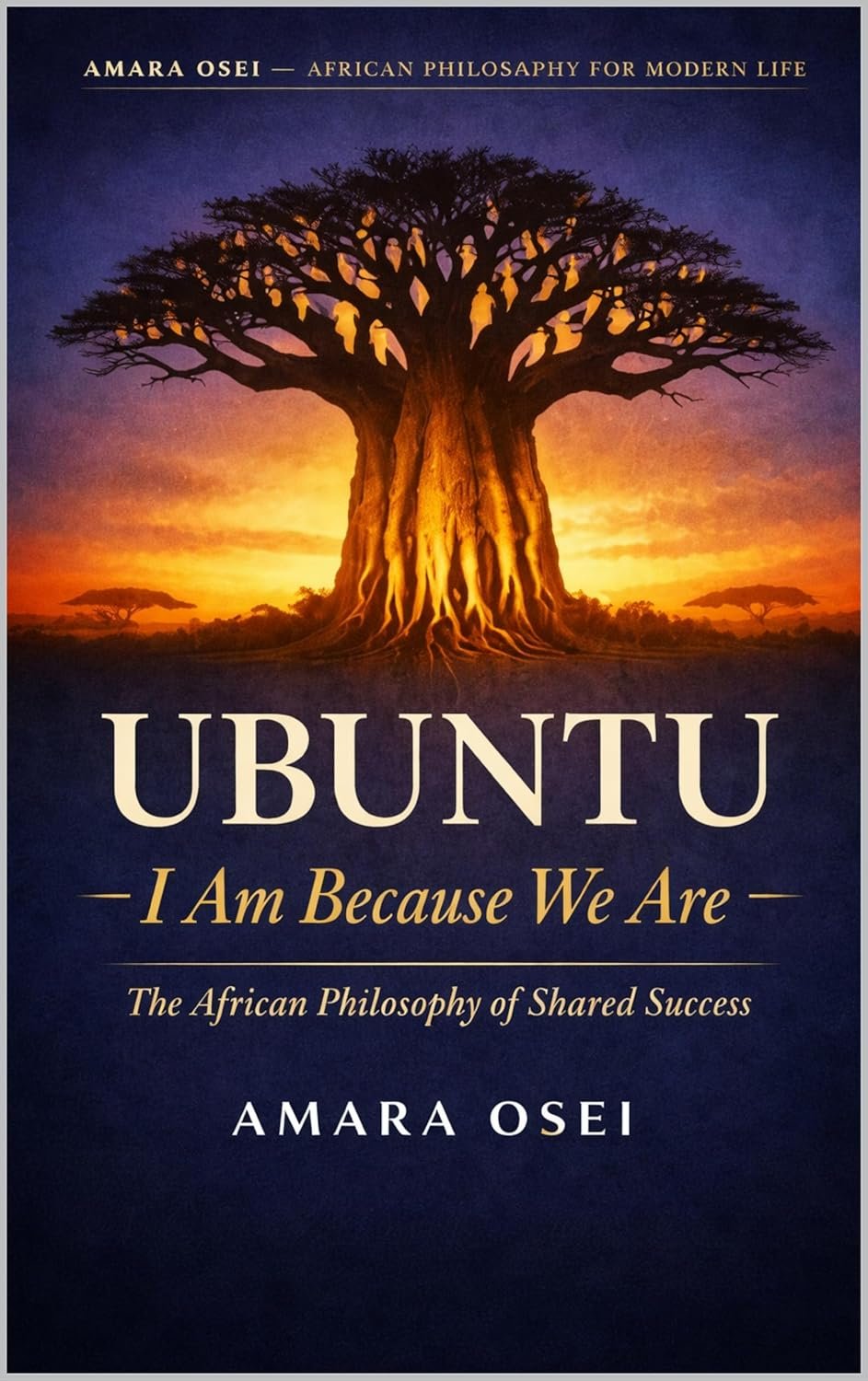
The full philosophy, as a book
The full philosophy of shared success — across leadership, conflict, accountability, and the digital age.
Read on Amazon