There is a temptation, when writing about a concept like Teranga, to make it noble. To treat Wolof / Senegalese thought as if it were uncomplicated wisdom waiting for the modern reader to catch up. Teranga and Ikigai? The honest answer requires resisting that flattery. Teranga is real philosophy. It has internal tensions. It can be misused. It still rewards close reading.
What Teranga Actually Means
The most commonly cited definition: Teranga is a Wolof word that does not translate cleanly. The closest English approximation is hospitality, but it is hospitality elevated to a defining cultural virtue. It is why Senegal calls itself 'the land of teranga.' It is the reflex to feed a stranger, to seat them, to ask after them. In the modern world it is also a strategy — for sales, leadership, customer experience, and any practice that depends on people choosing to come back. That sentence is true, as far as it goes. It is also incomplete. Teranga is held inside a wider Wolof grammar — a set of related concepts, social practices, and proverbs — that the standalone definition cannot carry.
Nit, nit ay garabam.Wolof — Man is the remedy of man.
The Question This Post Is About
Teranga from Senegal, West Africa meets ikigai from Japan. The conversation is more interesting than the comparison. The question is worth taking seriously, because Teranga is one of those concepts that loses its shape when handled carelessly — and recovers it as soon as the reader is willing to slow down and listen.
The most concrete way Teranga shows up in working life is in how a manager handles failure. The Western reflex is to find the responsible individual, document the failure, and move on. Teranga insists on a slower, harder question first: what did the team make possible, and what did it fail to prevent? The shift sounds soft. It is not. Sales calls are followed by a thank-you that does not ask for anything.
A Second Angle
The comparison is not symmetric. Teranga did not develop in dialogue with the Western frameworks it now sits beside on a bookshelf. It developed inside Wolof life, answering questions that Wolof life kept posing. To ask whether Teranga is "better than" individualism, or stoicism, or productivity culture, is to ask the wrong question. The right question is narrower and more useful: what does Teranga see clearly that the framework I currently use does not? Sales calls are followed by a thank-you that does not ask for anything.
Where the Concept Resists
It would be dishonest to pretend Teranga is uncomplicated. The concept can be — and has been — used to suppress dissent in the name of harmony, to extract unpaid labour from women in the name of community, and to soften criticism that should have been sharper. Any serious reading of Teranga has to hold these uses in view. The concept survives the criticism. But it is not innocent.
What to Do With This
The reading you have just done is one entry into Teranga. There are many others. Wolof elders, Senegal, West Africa writers, and the daily life of communities that have lived this concept for centuries are richer sources than any essay. Treat this as a doorway, not a destination.
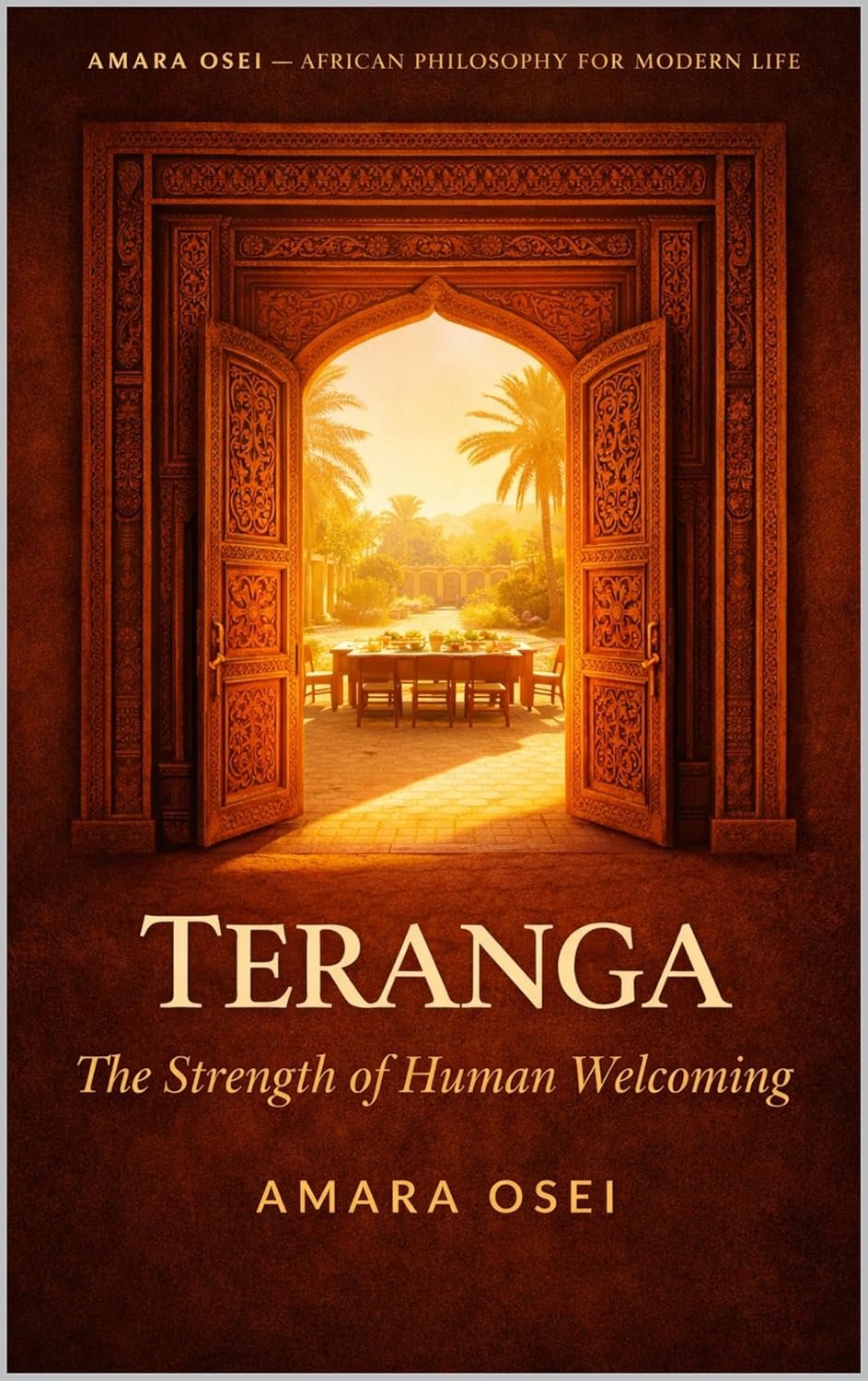
The full philosophy, as a book
The Senegalese philosophy of generosity as strategy — in business, sales, leadership, and life.
Read on Amazon