Most of what is written about Sankofa in English is wrong. Not maliciously — usually it is wrong because Sankofa resists translation, because the concept does not match neatly onto Western categories, because the writers are working with a sentence-long summary instead of a tradition. Sankofa in the Twenty-First Century? This essay is one attempt at a more careful answer.
What Sankofa Actually Means
Translators usually settle on something like: Sankofa is an Akan word and a symbol — most often a bird with its head turned backward, holding an egg in its beak. The egg is the future; the head turned backward is the past. Together they teach a simple, demanding idea: it is not wrong, nor shameful, to go back and fetch what you forgot. The future cannot be built on amnesia. It is a defensible translation. But translation is the surface. Sankofa carries underneath it a set of assumptions — about what a person is, what owes what to whom, and what success even means — that the English sentence cannot deliver.
If you don't know where you're going, return to where you came from.Akan
The Question This Post Is About
What Sankofa looks like now — in cities, online, and in workplaces far from Ghana, West Africa. The question is worth taking seriously, because Sankofa is one of those concepts that loses its shape when handled carelessly — and recovers it as soon as the reader is willing to slow down and listen.
Take the modern workplace as a test case. The dominant Western model treats the team as a coalition of individual contributors who happen to share a Slack channel — each evaluated alone, promoted alone, and let go alone. Sankofa starts somewhere different. It assumes that the unit of analysis is the team, that performance is co-produced, that to praise a single person without naming the people around them is a kind of category error. The implications are uncomfortable for managers trained in the Western model. Before changing a long-running practice, the team asks an elder of the practice what it was for.
A Second Angle
The most concrete way Sankofa shows up in working life is in how a manager handles failure. The Western reflex is to find the responsible individual, document the failure, and move on. Sankofa insists on a slower, harder question first: what did the team make possible, and what did it fail to prevent? The shift sounds soft. It is not. Before changing a long-running practice, the team asks an elder of the practice what it was for.
Where the Concept Resists
There is a real risk in romanticising Sankofa. The Akan / Ghanaian traditions that produced it have always also produced internal critics — voices warning against the misuse of communal philosophy to demand conformity, to silence the young, to protect bad behaviour by elders. The honest defender of Sankofa keeps those critics at the table.
What to Do With This
What can you do with this? Begin small. Choose one place — one meeting, one relationship, one daily ritual — and run it through Sankofa for a month. Not as a project. As a quiet experiment. Notice what changes. Sankofa is not learned by reading; it is learned by repetition.
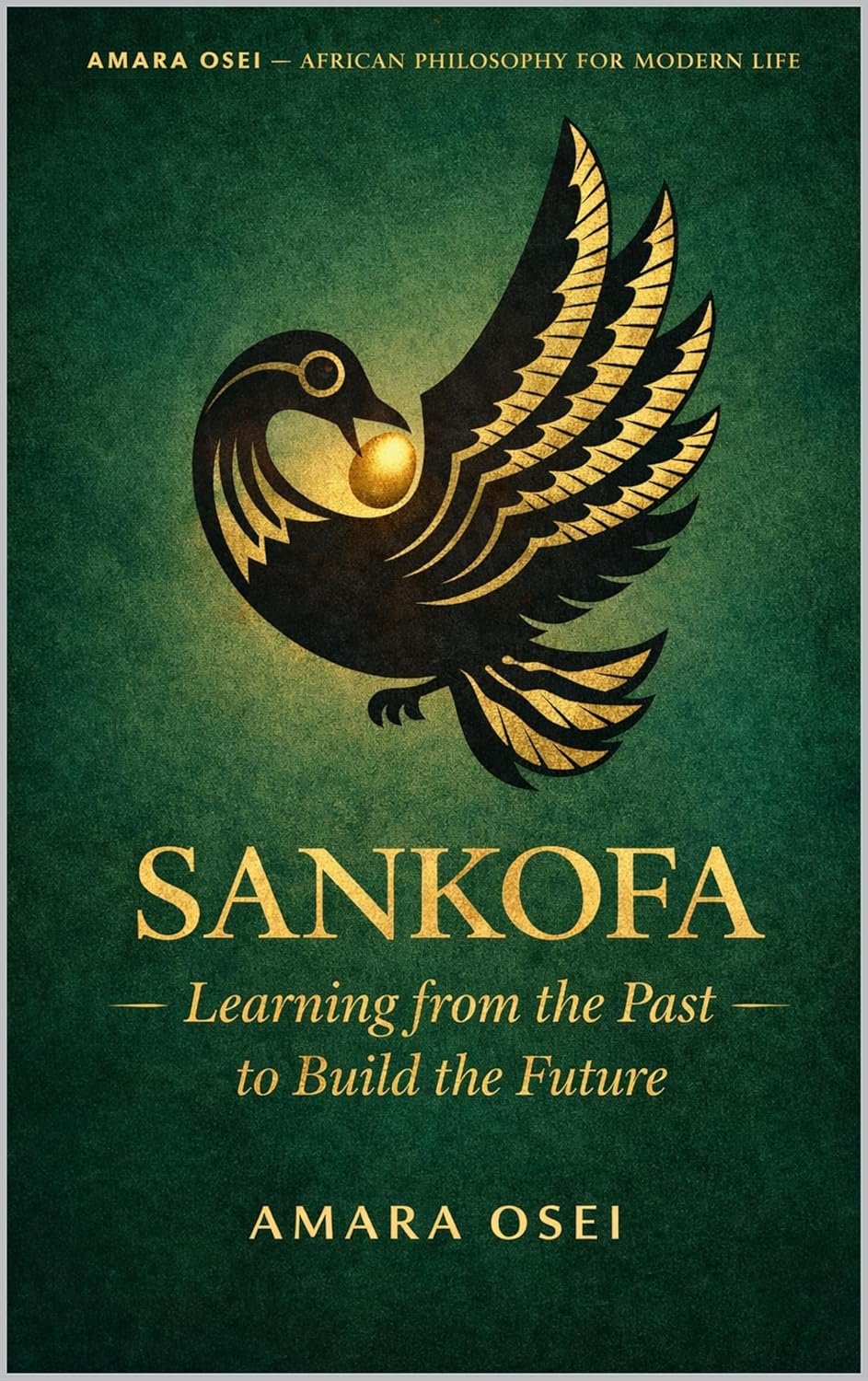
The full philosophy, as a book
How to use your history, your failures, and your traditions as fuel rather than baggage.
Read on Amazon