Begin with the word itself. Sankofa, in Akan / Twi, sits in a different grammatical and emotional register than its closest English equivalents. Sankofa and Decision-Making? You cannot answer that question without first sitting with the word — and noticing what English doesn't quite have a slot for.
What Sankofa Actually Means
Translators usually settle on something like: Sankofa is an Akan word and a symbol — most often a bird with its head turned backward, holding an egg in its beak. The egg is the future; the head turned backward is the past. Together they teach a simple, demanding idea: it is not wrong, nor shameful, to go back and fetch what you forgot. The future cannot be built on amnesia. It is a defensible translation. But translation is the surface. Sankofa carries underneath it a set of assumptions — about what a person is, what owes what to whom, and what success even means — that the English sentence cannot deliver.
Se wo were fi na wosankofa a yenkyi.Akan — It is not wrong to go back for what you forgot.
The Question This Post Is About
Decisions made through Sankofa take longer — and last longer. Why. The question is worth taking seriously, because Sankofa is one of those concepts that loses its shape when handled carelessly — and recovers it as soon as the reader is willing to slow down and listen.
The most concrete way Sankofa shows up in working life is in how a manager handles failure. The Western reflex is to find the responsible individual, document the failure, and move on. Sankofa insists on a slower, harder question first: what did the team make possible, and what did it fail to prevent? The shift sounds soft. It is not. The first hire of any new venture is someone older who has done it before.
A Second Angle
Parenting through Sankofa is not soft parenting. The phrase 'it takes a village' has been so domesticated in English that it now means almost nothing. The Akan / Ghanaian version is sharper: the child is not yours alone, and the discipline of raising them well is not yours alone either. The first hire of any new venture is someone older who has done it before.
Where the Concept Resists
There is also the question of authority. Who gets to speak for Sankofa? The traditions in which it lives are old, plural, sometimes in disagreement with each other. Anyone — including the writer of this essay — who claims a definitive reading is overreaching. The careful reader treats every restatement of Sankofa, including this one, as one voice among many.
What to Do With This
There is no certificate at the end of Sankofa. There is only the slow accumulation of choices made differently — meetings shaped differently, relationships tended differently, decisions weighed differently. The reward is not visible. The cost is real. Over time the difference becomes a kind of life.
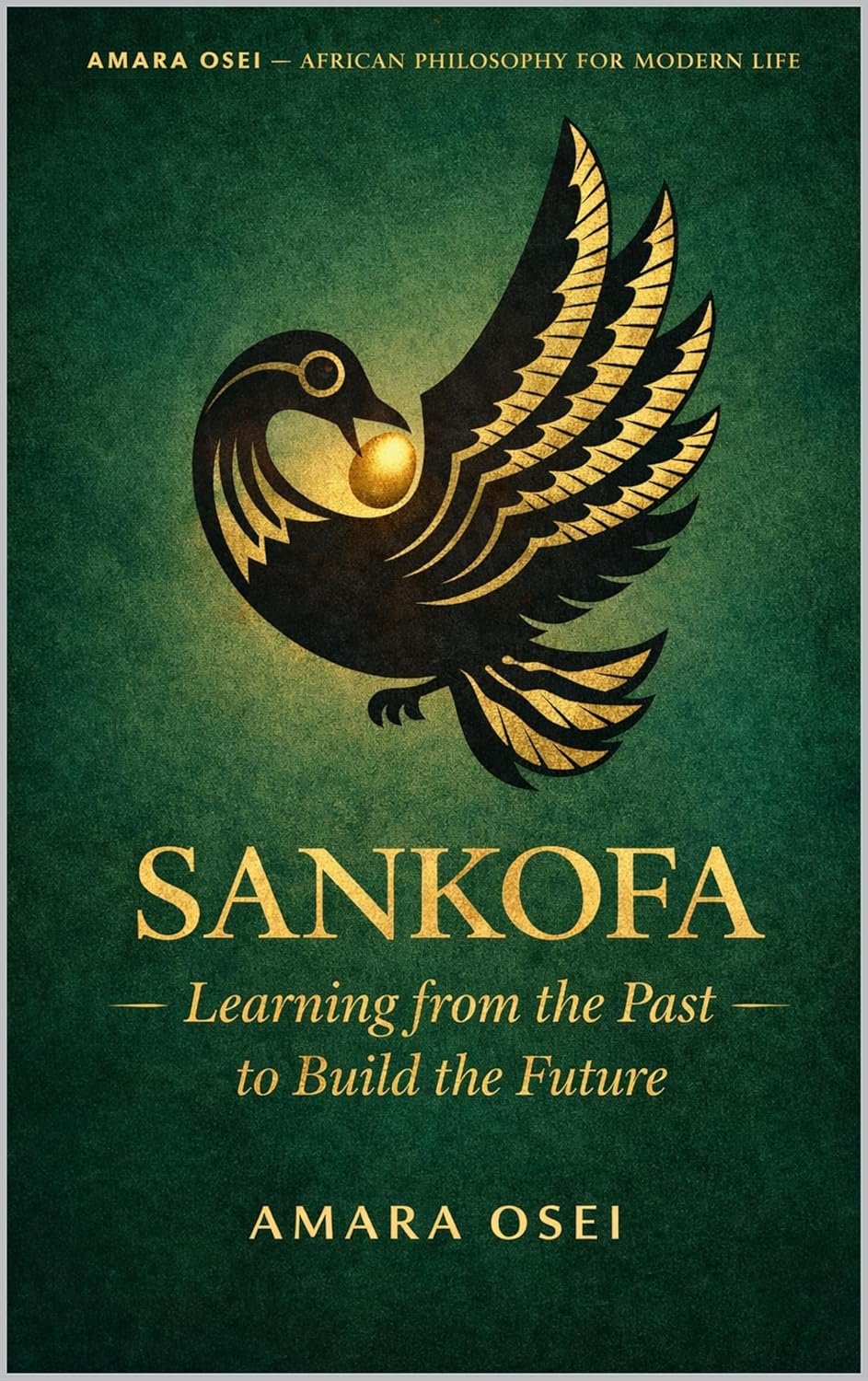
The full philosophy, as a book
How to use your history, your failures, and your traditions as fuel rather than baggage.
Read on Amazon