Most of what is written about Sankofa in English is wrong. Not maliciously — usually it is wrong because Sankofa resists translation, because the concept does not match neatly onto Western categories, because the writers are working with a sentence-long summary instead of a tradition. Sankofa and Caregiving? This essay is one attempt at a more careful answer.
What Sankofa Actually Means
The most commonly cited definition: Sankofa is an Akan word and a symbol — most often a bird with its head turned backward, holding an egg in its beak. The egg is the future; the head turned backward is the past. Together they teach a simple, demanding idea: it is not wrong, nor shameful, to go back and fetch what you forgot. The future cannot be built on amnesia. That sentence is true, as far as it goes. It is also incomplete. Sankofa is held inside a wider Akan grammar — a set of related concepts, social practices, and proverbs — that the standalone definition cannot carry.
If you don't know where you're going, return to where you came from.Akan
The Question This Post Is About
Caring for a parent, a child, a partner — what Sankofa offers and what it asks. The question is worth taking seriously, because Sankofa is one of those concepts that loses its shape when handled carelessly — and recovers it as soon as the reader is willing to slow down and listen.
Parenting through Sankofa is not soft parenting. The phrase 'it takes a village' has been so domesticated in English that it now means almost nothing. The Akan / Ghanaian version is sharper: the child is not yours alone, and the discipline of raising them well is not yours alone either. Every project begins by reading the postmortems of the previous three.
A Second Angle
There is a specific application of Sankofa that managers rediscover every few years and act surprised to find: the practice of asking, before any consequential decision, who has not yet been heard from. The question seems procedural. It is not. It is a small Sankofa act, repeated, that changes the temperature of an organisation over years. Every project begins by reading the postmortems of the previous three.
Where the Concept Resists
There is a real risk in romanticising Sankofa. The Akan / Ghanaian traditions that produced it have always also produced internal critics — voices warning against the misuse of communal philosophy to demand conformity, to silence the young, to protect bad behaviour by elders. The honest defender of Sankofa keeps those critics at the table.
What to Do With This
There is no certificate at the end of Sankofa. There is only the slow accumulation of choices made differently — meetings shaped differently, relationships tended differently, decisions weighed differently. The reward is not visible. The cost is real. Over time the difference becomes a kind of life.
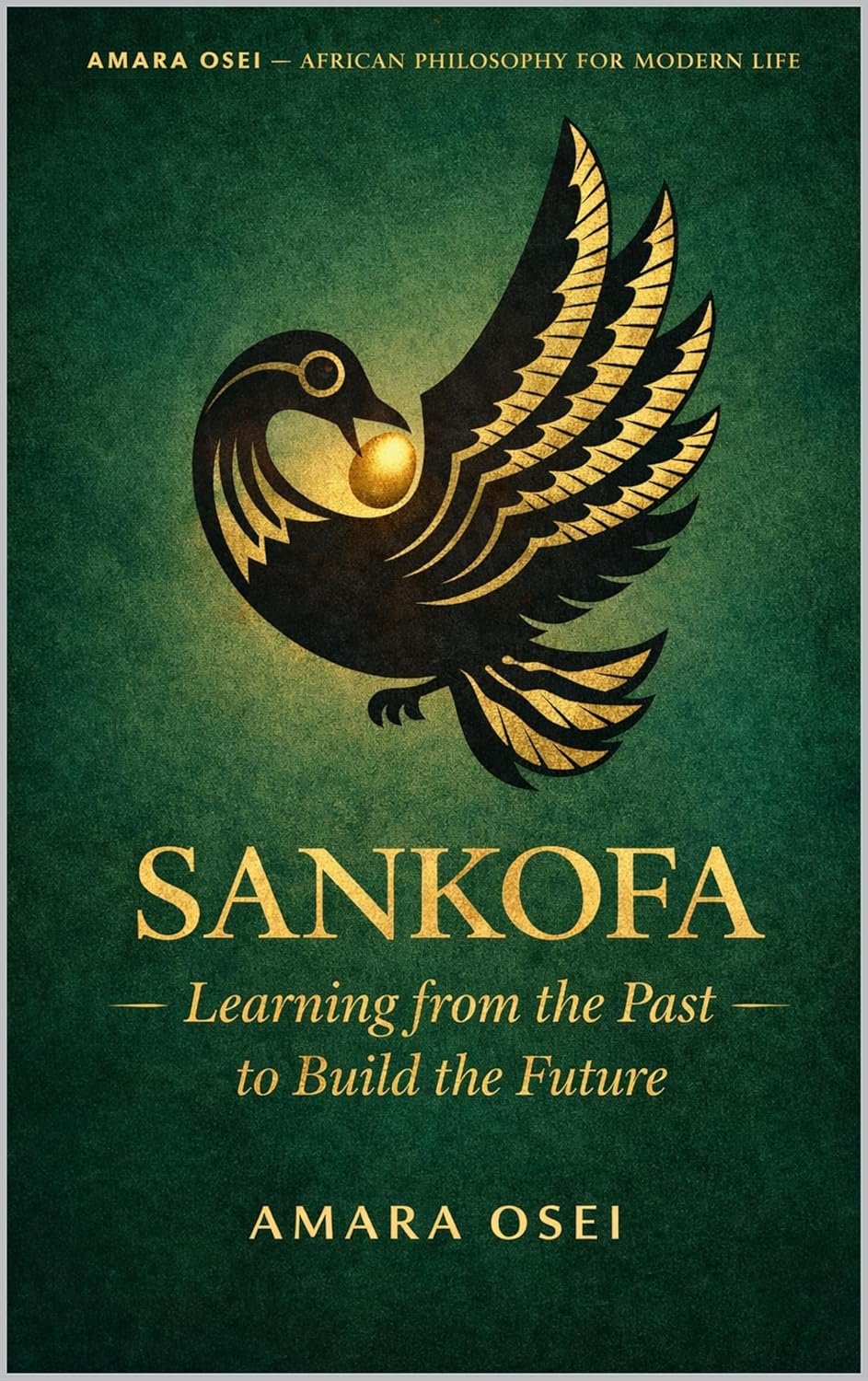
The full philosophy, as a book
How to use your history, your failures, and your traditions as fuel rather than baggage.
Read on Amazon