If you have heard Indaba only in the context of corporate diversity training or a viral leadership quote, you have not really heard Indaba. Indaba in Cross-Functional Teams? The version of the word that survives in Southern Africa is older, stranger, and more demanding than the version that travels.
What Indaba Actually Means
The most commonly cited definition: Indaba is a Zulu and Xhosa word for a council meeting — historically of elders, today of any group that needs to make a decision worth keeping. The form has been borrowed by international climate negotiators, corporate boards, and community organisations because of one quality: it produces decisions that hold. It does this by refusing the Western meeting model — the loudest voice, the rushed vote, the unread minutes — in favour of structured listening, ritualised speech, and visible consensus. That sentence is true, as far as it goes. It is also incomplete. Indaba is held inside a wider Zulu / Xhosa grammar — a set of related concepts, social practices, and proverbs — that the standalone definition cannot carry.
Indaba ibanjwa ngabaningi.Zulu — A matter is held by the many.
The Question This Post Is About
When teams from different departments must build together, Indaba is what holds it. The question is worth taking seriously, because Indaba is one of those concepts that loses its shape when handled carelessly — and recovers it as soon as the reader is willing to slow down and listen.
The most concrete way Indaba shows up in working life is in how a manager handles failure. The Western reflex is to find the responsible individual, document the failure, and move on. Indaba insists on a slower, harder question first: what did the team make possible, and what did it fail to prevent? The shift sounds soft. It is not. Disagreement is recorded in the minutes, not absorbed by majority rule.
A Second Angle
In a long marriage, Indaba is the antidote to the modern romantic fantasy that each partner is supposed to be the other's everything. The Zulu / Southern African version is gentler: you are part of a wider weave, and so is your marriage, and the marriage is held in part by the people around it. Disagreement is recorded in the minutes, not absorbed by majority rule.
Where the Concept Resists
It would be dishonest to pretend Indaba is uncomplicated. The concept can be — and has been — used to suppress dissent in the name of harmony, to extract unpaid labour from women in the name of community, and to soften criticism that should have been sharper. Any serious reading of Indaba has to hold these uses in view. The concept survives the criticism. But it is not innocent.
What to Do With This
If you are new to Indaba, the most useful place to start is not with a study or a course but with a question, asked of yourself, at the end of an ordinary day: who held me up today, and whom did I hold? Sit with the answer. Do not improve it yet. The concept will deepen on its own, repeated, over weeks. This is how Indaba actually enters a life.
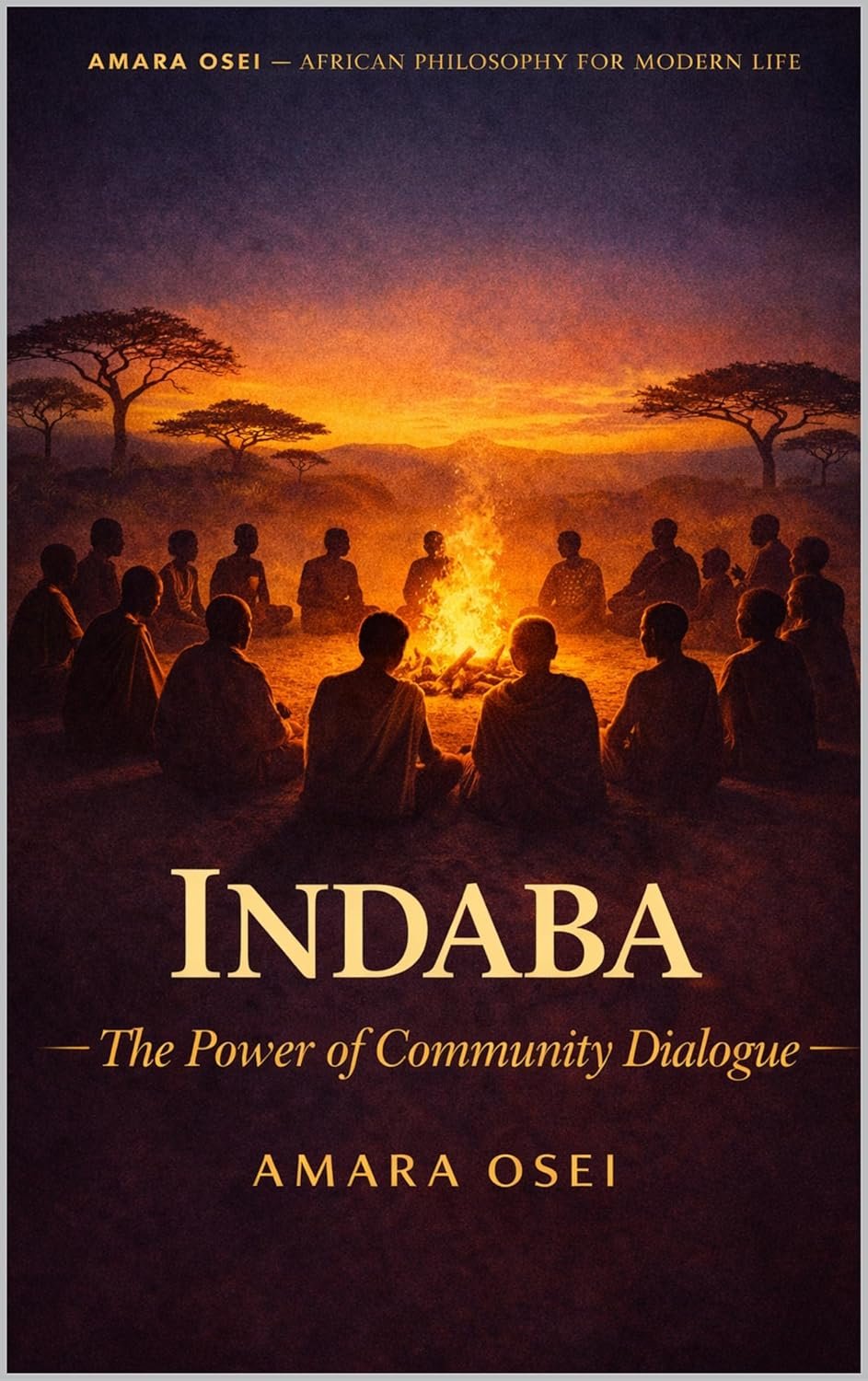
The full philosophy, as a book
How to run meetings where everyone is heard — and the decisions you make actually stick.
Read on Amazon