If you have heard Indaba only in the context of corporate diversity training or a viral leadership quote, you have not really heard Indaba. Indaba and the Failed Project? The version of the word that survives in Southern Africa is older, stranger, and more demanding than the version that travels.
What Indaba Actually Means
Indaba is a Zulu and Xhosa word for a council meeting — historically of elders, today of any group that needs to make a decision worth keeping. The form has been borrowed by international climate negotiators, corporate boards, and community organisations because of one quality: it produces decisions that hold. It does this by refusing the Western meeting model — the loudest voice, the rushed vote, the unread minutes — in favour of structured listening, ritualised speech, and visible consensus. This much is on Wikipedia and in introductory leadership books. What is harder to find — and harder to translate — is the texture of the concept: the way Indaba shapes a thousand small daily choices in a Zulu / Southern African household, and how those choices accumulate into a different shape of life.
Two heads are better than one.African proverb
The Question This Post Is About
A post-mortem in the spirit of Indaba. What it surfaces that other post-mortems miss. The question is worth taking seriously, because Indaba is one of those concepts that loses its shape when handled carelessly — and recovers it as soon as the reader is willing to slow down and listen.
Take a small, ordinary case. A team of nine. A project that was supposed to take a quarter is now in its second. The manager has the option to find a single person to assign blame to and to move on. The Indaba reading offers a different question: what did we, as a team, fail to make possible for the person carrying this work? Disagreement is recorded in the minutes, not absorbed by majority rule. The case is not unusual. The reading of it, in the spirit of Indaba, is.
A Second Angle
Notice what the case is not asking. It is not asking who is to blame. It is not asking how to make the situation more efficient. It is asking what Indaba would have us do here, with these particular people, in this particular knot. Disagreement is recorded in the minutes, not absorbed by majority rule. The discipline of asking the Indaba question — instead of the efficiency question, or the blame question — is what changes a working life over years.
Where the Concept Resists
There is also the question of authority. Who gets to speak for Indaba? The traditions in which it lives are old, plural, sometimes in disagreement with each other. Anyone — including the writer of this essay — who claims a definitive reading is overreaching. The careful reader treats every restatement of Indaba, including this one, as one voice among many.
What to Do With This
If you are new to Indaba, the most useful place to start is not with a study or a course but with a question, asked of yourself, at the end of an ordinary day: who held me up today, and whom did I hold? Sit with the answer. Do not improve it yet. The concept will deepen on its own, repeated, over weeks. This is how Indaba actually enters a life.
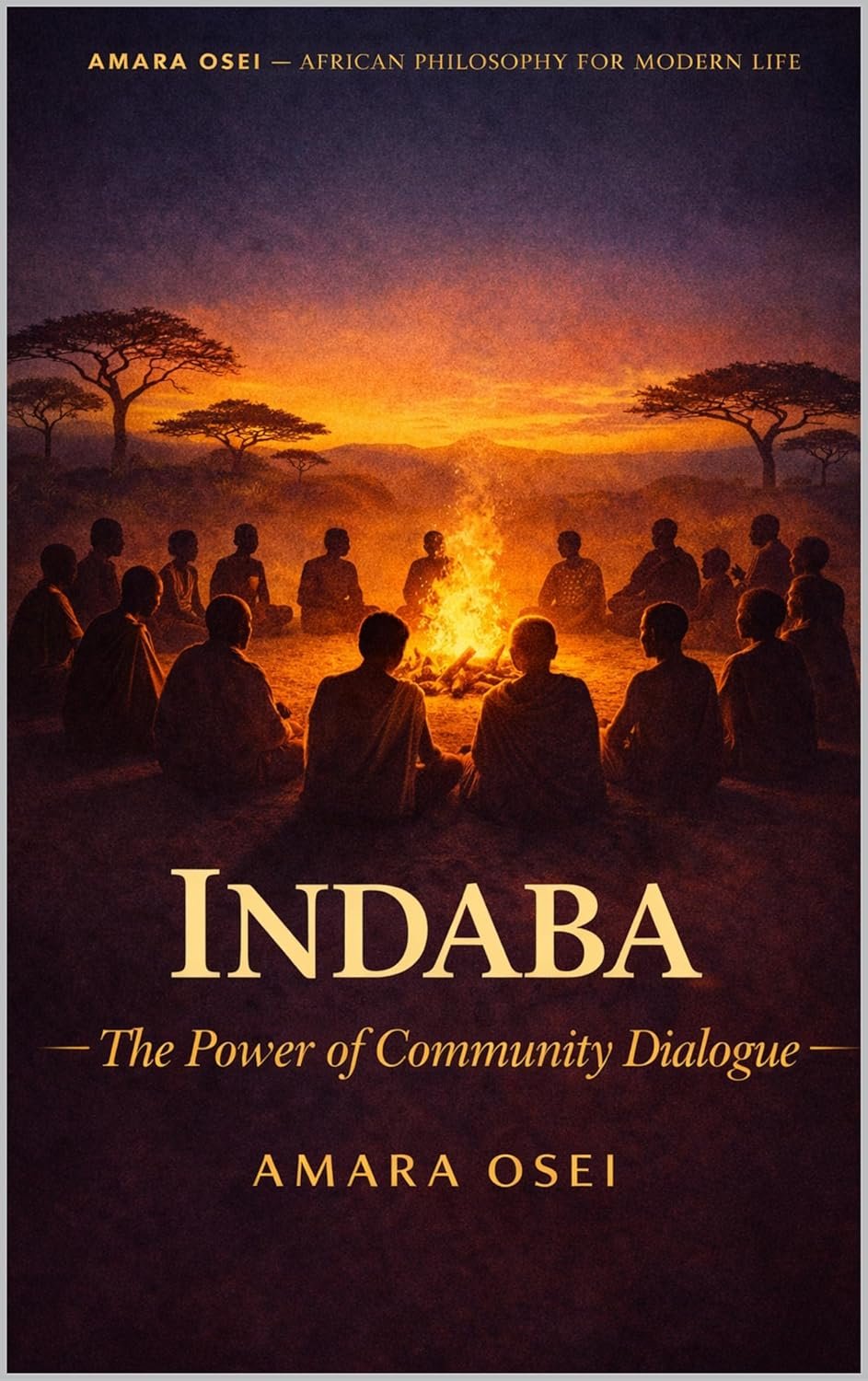
The full philosophy, as a book
How to run meetings where everyone is heard — and the decisions you make actually stick.
Read on Amazon